Outcomes for Women's Heart Transplant Patients
Purpose of this Page
This webpage is designed to help researchers, patients, and students explore long-term heart transplant outcomes in women. It provides curated sources, highlights key gender differences in transplant success, and shows how to use this data to guide insights and research.
Data Sub-Genre: Long-Term Impacts of Women's Heart Transplants
This sub-genre explores how heart transplant outcomes uniquely affect women over the long term, including their survival, response to treatment, and reproductive health. It emphasizes how women navigate not only transplant recovery but also complex factors such as hormone-influenced rejection risks, pregnancy, and infant outcomes—offering a more holistic view of post-transplant life.

This article presents survival data, highlighting that women have better 5-year and 10-year survival rates compared to men. It also discusses acute rejection and malignancy risks in depth.

Survival rate chart comparing male vs female transplant patients [source]

The American Heart Association published this study on the effect of donor and recipient gender in transplant outcomes. The graph shows slightly higher long-term survival among women, supporting biological and behavioral factors that improve outcomes.

Kaplan-Meier survival curve: female vs male transplant recipients [source]

This infographic from Vanderbilt summarizes self-reported pregnancy outcomes in heart transplant patients. It explores complications like hypertension, infections, and rejection, but also reveals strong infant outcomes such as zero neonatal deaths and high breastfeeding rates. This offers a powerful resource for women managing post-transplant fertility decisions and clinicians guiding them.
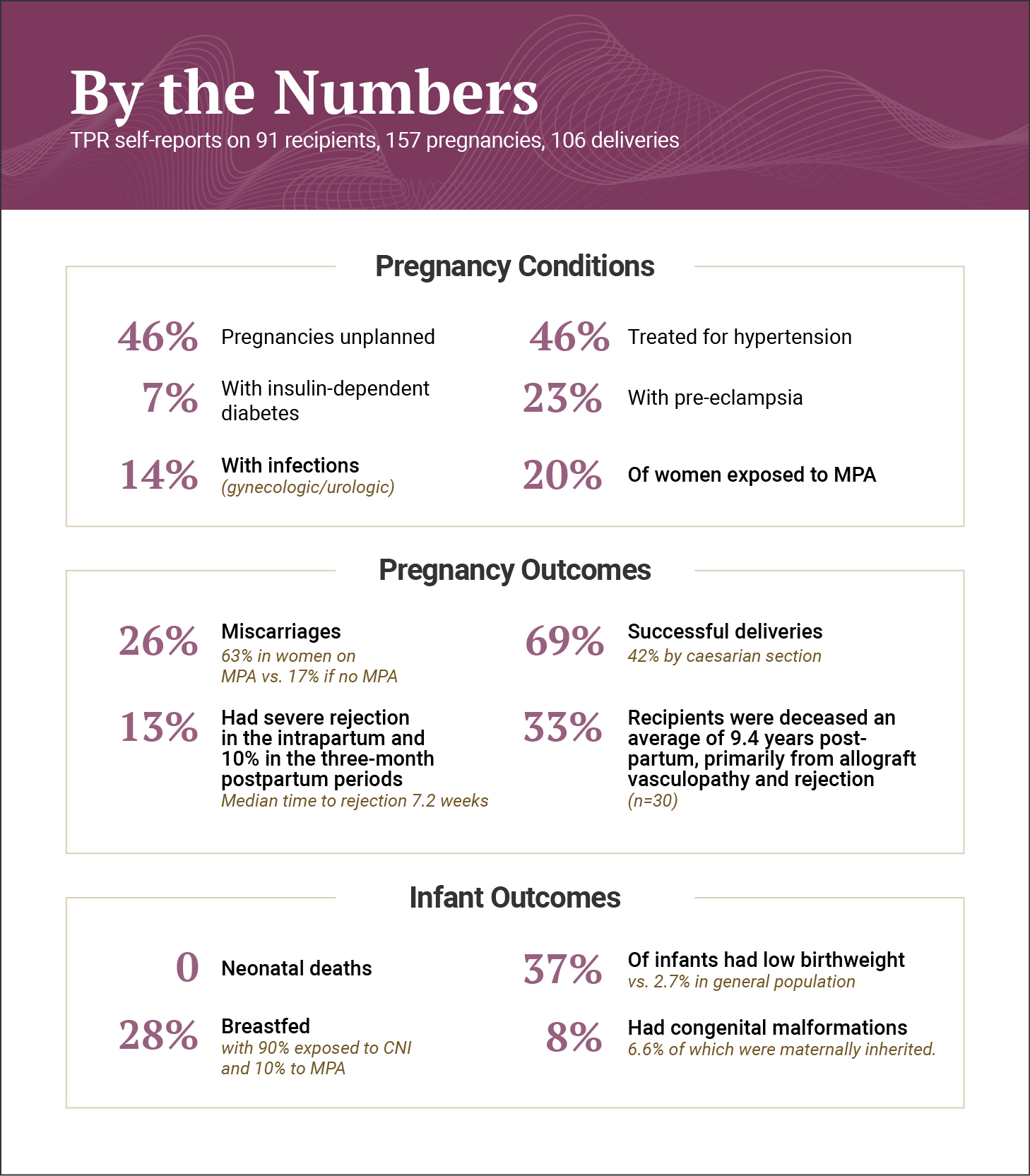
Pregnancy and infant outcomes among transplant recipients [source]
How to Use This Information
This collection of resources allows patients, caregivers, and researchers to examine how women experience heart transplants differently and how this influences decisions about long-term care, reproductive health, and clinical strategy. Below are narrative insights and a sample walk-through to guide users through meaningful discovery:
🔍 Example Goals a Consumer Might Have:
- Compare male vs. female long-term survival rates to evaluate gender-specific risks or advantages.
- Identify which complications are more common in women and whether hormonal factors like estrogen provide protection.
- Understand whether pregnancy is feasible after a transplant and what data exists on infant and maternal outcomes.
🧭 How to Use Each Resource
1. ScienceDirect provides long-term survival statistics comparing men and women. A user can analyze the survival chart to assess how outcomes diverge after 5–10 years. By hovering over data points in the article or reading the footnotes, they’ll see statistical significance and risk categories.
2. AHA Journals provides a Kaplan-Meier curve with survival broken down by gender. A user could compare curve slopes between red (female) and blue (male) lines to identify time periods where outcomes start to diverge.
3. Vanderbilt Health provides a detailed infographic with statistics on pregnancy and infant outcomes after transplant. A user could note that while 69% of pregnancies result in successful delivery, 26% end in miscarriage, and understand that post-transplant reproductive planning requires specialized care.
🧠 Sample Walkthrough
Let’s say a cardiologist is working with a 30-year-old female patient who recently received a heart transplant and is interested in future pregnancy. The doctor begins by opening the Vanderbilt article to examine the rate of complications such as hypertension and pre-eclampsia. Then, they consult the ScienceDirect article to compare long-term survival expectations for women who underwent transplantation at similar ages. Lastly, they turn to AHA’s study to confirm that even among high-risk donors, female recipients consistently show a survival edge. The integration of this data helps the provider tailor reproductive counseling, flag elevated risks, and emphasize the importance of personalized monitoring over time.
This process demonstrates how combining multiple evidence-based sources allows for richer insights, empowering patients and guiding smarter clinical care.